Showing posts with label China. Show all posts

Tuesday, November 19, 2024

China's GDF-600 Hypersonic Glide Platform - A Groundbreaking Development in Modern Warfare

China has recently unveiled its latest foray into the world of high tech weaponry.  At the Zhuhai Air Show 2024, China revealed its GDF-600 hypersonic boost glide concept vehicle that will have a wide range of capabilities as you will see in this posting.


The GDF-600 will be designed to have an operational range of between 500 and 1000 kilometres which could theoretically be extended to 6000 kilometres at speeds of between Mach 7 and Mach 10 (5369 mph to 7673 mph) at a maximum altitude of 40 kilometres.  Its design allows it to penetrate modern air defences and can be used for both anti-ship and land-attack purposes.  It has a launch mass of 5000 kilograms and a payload capacity of 1200 kilograms.  One of the key aspects of the GDF-600 is its sub-munition separation system which will give it the capability to release different payload types while in-flight.  These sub-payloads include:


1.) supersonic missiles with ranges of between 100 to 500 kilometres at speeds of between 2400 and 6000 kmph


2.) subsonic missiles with ranges of between 50 to 100 kilometres at speeds of between 730 and 1030 kmph


3.) cruise missiles with a ranges of between 10 and 80 kilometres at speeds of between 300 and 600 kmph


4.) aerial bombs with a range of 70 kilometres


5.) drones with an operating range of between 2 and 15 kilometres


These wide-ranging munitions will allow the GDF-600 to be used for multiple purposes including direct kinetic strikes against specific targets, reconnaissance missions and electronic warfare.  The fact that these munitions can be released at various points along the GDF-600s trajectory allow it to make simultaneous strikes on several targets at the same time which will complicate the defense response of its adversaries.


Here is a photo of the mockup GDF-600 showing its multiple payload capabilities:


Here is a video providing additional information about the GDF-600:


This very significant advancement in China's hypersonic weapons capabilities stands in sharp contrast to the United States troubled experience with hypersonic weaponry.  For example, the Air Force's AGM-183A ARRW which, as you can see here, is not operational at this point in time:


Additionally, the United States Army's Long-Range Hypersonic Weapon aka Dark Eagle is also not ready for deployment as shown here:


The addition of the GDF-600 to China's growing arsenal of high tech weapons will make any intervention against the nation in its ongoing tiff with Taiwan and its territorial claims in the South China Sea more complicated particularly given that the weapon will have a wide range of anti-ship capabilities.  As well, its ability to conduct electronic warfare could disrupt communications and radar which would significantly compromise the ability of the United States and its proxies to defend against the GDF-600.


Sunday, June 23, 2024

How Washington is Begging for War with China

In the monthly archive of the foreign military sales which appear on the Defense Security Cooperation Agency's website for the month of June 2024, we find the following announcements of sales to Taiwan:


1.) Sale of Switchblade 300 Anti-Personnel and Anti-Armour Loitering Missile Systems:


Here is some background on the Switchblade 300 Block 20:


2.) Sale of Altius 600M-V Unmanned Aerial Vehicles:


Here is some background on the Altius 600M:


3.) Sale of F-16 Non-Standard Spare and Repair Parts:


4.) Sale of F-16 Standard Spare and Repair Parts:


These four sales of materiel to Taiwan in the month of June 2024 total $660.2 million.


All four of these sales fall under the proclamation that "the proposed sale of this equipment and support will not alter the basic military balance in the region".  If that was the case, why approve the sales?  As well, I'm sure that China's leadership would wholeheartedly agree that this is not a direct threat to their plans for the region.


Of the sales, the sale of 291 Altius 600m-V Unmanned Aerial Vehicles and 720 Switchblade 300 drones follow this speech by Deputy Secretary of Defense Kathleen Hicks' comments at a lunchtime speech in September 2023:


"Last week I gave a speech, you all may know, about our need to innovate with urgency in this enduring age of strategic competition with the PRC. And there I described, in some detail, much of what we have been doing to enable and unleash the potential of U.S. and partner innovators....


And we've been doing quite a lot: Mapping and debugging DoD's innovation ecosystem. Rapidly iterating and investing to be a data-driven and AI-empowered military now. Incentivizing more joint experimentation and concept development. Extending bridges and express lanes over the so-called valley of death; of course, there are many valleys of death. Accelerating software acquisition and procurement of innovative technologies. And so much more. 


Why the urgency? Because our main strategic competitor today, the PRC, has spent the last 20 years building a modern military carefully crafted to blunt the operational advantages we've enjoyed for decades....


Last week, I announced our Replicator initiative — the latest effort to overcome the production valley of death, beginning with accelerating the scaling of all-domain attritable autonomous systems.


First, let's be crystal clear: Replicator is not a new program of record. We're not creating a new bureaucracy. And we will not be asking for new money in FY24. Not all problems need new money; we are problem-solvers, and we intend to self-solve.


So, Replicator will use existing funding, existing programming lines, and existing authorities to accelerate production and delivery at scale — by exerting leadership focus and attention on a singular operational challenge and maturing solutions, because that's what ultimately delivers....


With Replicator, we're beginning with all-domain, attritable autonomy, or ADA2, to help us overcome the PRC's advantage in mass: more ships, more missiles, more forces....


Let me give you a window into the possibilities of all-domain, attritable autonomy.


Imagine distributed pods of self-propelled ADA2 systems afloat, powered by the sun and other virtually-limitless resources, packed with sensors aplenty, enough to give us new, reliable sources of information in near-real-time.


Imagine fleets of ground-based ADA2 systems delivering novel logistics support, scouting ahead to keep troops safe, or securing DoD infrastructure.


Imagine constellations of ADA2 systems on orbit, flung into space scores at a time, numbering so many that it becomes impossible to eliminate or degrade them all. 


Imagine flocks of ADA2 systems, flying at all sorts of altitudes, doing a range of missions, building on what we've seen in Ukraine. They could be deployed by larger aircraft, launched by troops on land or sea, or take off themselves.


Bigger-picture, ADA2 systems let us think and act differently in doing things we've always done. Recall in Ukraine, a Patriot battery intercepted a Russian hypersonic missile; that's how traditional platforms do missile defense — and it's an incredible accomplishment, underscoring why we need them. 


Elsewhere, ADA2 systems might counter missiles differently — perhaps like active protection systems on a tank, or other types of countermeasures. 


And those are just a handful of the use cases for ADA2 systems."


She refers to it as "the small, smart and cheap" philosophy of warfare through the use of thousands of drones which will be used to overwhelm the Chinese advantage in "mass".


Washington has taken the first steps toward its new "Replicator Initiative" by arming Taiwan with Switchblade 300 Anti-Personnel and Anti-Armour Loitering Missile and Altius 600m-V drone systems.  How the nation's ruling class can think that China won't view these sales as anything but a provocation over its stated goal of reunifying Mainland China and Taiwan is beyond my comprehension.


Tuesday, October 31, 2023

The Certainty of War with China

Back in late January 2023, this memo dated February 1, 2023 from the Department of the Air Force, Headquarters Air Mobility Command which was not intended for public consumption, made the rounds on social media platforms, particularly "X":


The memo with the subject line "The Next Fight" was written by General Michael A. Minihan, Commander, Air Mobility Command of the United States Air Force.  Here is his biography as it appears on the official website of the United States Air Force:


The key excerpt from the memo is as follows (my bold):


"I hope I am wrong. My gut tells me we will fight in 2025. [Chinese President Xi Jinping] secured his third term and set his war council in October 2022. Taiwan’s presidential elections are in 2024 and will offer Xi a reason. United States’ presidential elections are in 2024 and will offer Xi a distracted America. Xi’s team, reason, and opportunity are all aligned for 2025. We spent 2022 setting the foundation for victory. We will spend 2023 in crisp operational motion building on that foundation. If you want to know what the operational motion I demand looks like, look at what Total Force Team Charleston did in January."


In the section entitled Commander's Intent, he states the following:


"Go faster. Drive readiness, integration, and agility for ourselves and the Joint Force to deter, and if required, defeat China."


He does, however, state this:


"This is the first of 8 monthly directives from me. You need to know I alone own the pen on these orders. My expectations are high, and these orders are not up for negotiation. Follow them. I will be tough, fair, and loving in my approach to secure victory."


Not surprisingly, at the time, a statement from Pentagon Press Secretary Air Force Brigadier General Patrick S. Ryder stated the following:


"The National Defense Strategy makes clear that China is the pacing challenge for the Department of Defense and our focus remains on working alongside allies and partners to preserve a peaceful, free and open Indo-Pacific...".


Notice that his comments state that the United States will work with allies and partners and not that it will work with China in an attempt to defuse the growing tensions in the Indo-Pacific region.


While this may be the official Pentagon stance, in fact, in a video on the Atlantic Council's YouTube account from October 2022, Admiral Michael M. Gilday, Chief of Naval Operations stated that the United States should be prepared to fight China "tonight" (11 minute 55 second mark):


Let's go back to General Minihan to wrap up this posting.  In a September 2023 article on Defense One:


...Minihan states the following when asked if the United States will go to war with China within the next two years:


"My assessment is that war is not inevitable, but the readiness I’m driving with that timeline is absolutely essential to deterrence and absolutely essential to the decisive victory....There needs to be tension on readiness, more than just ‘be ready tonight.’ You need to have readiness that drives urgency. The urgency and the action are paramount."


While none of us know what lies ahead, one thing would appear to be certain; Washington is preparing for it's next war and this time, the adversary will be an extremely capable and heavily armed nation which will be fighting in its own backyard to protect itself from outside forces that really have no business meddling in the region whatsoever.  While war with China would appear to be a certainty, a victory over China is far, far less certain.


Sunday, April 23, 2023

China and the Afghanistan Lithium Coup

Here is a recent article that appeared on the Khaama Press News Agency website, an independent news organization which was formed in 2010 to ensure free press and journalism in Afghanistan:


As background, according to Afghanistan's Ministry of Information and Cultures’ analytical data in 2021, Khaama Press was ranked as Afghanistan’s top ranking and number one news website. 


A similar article appeared on the Afghanistan Times news website:


China, a nation whose leadership plays the long-game, is making this move to ensure the security of its supply of lithium, a key component in the global move toward electrification.


Back in 2022, the Brookings Institution took notice of this possibility:


Here is a quote:


"Concern by the United States and its allies about China’s potential push into Afghanistan’s mining sector is well-founded. China is diplomatically and commercially poised to make additional moves in Afghanistan. Beijing is well positioned to strike mining deals with the Taliban. It has kept its diplomatic mission running in Kabul, hinted that it may formally recognize the Taliban government, and voiced opposition to international sanctions against Afghanistan— though has stopped short of trying to lift them. Foreign Minister Wang Yi even made a surprise visit to the country in late March, the highest-ranking foreign official of any country besides Pakistan and Qatar to do so after the Taliban’s rise to power. He denounced “the political pressure and economic sanctions on Afghanistan imposed by non-regional forces.”


Chinese-Afghan mining deals theoretically make sense. Chinese mining companies could provide the Taliban with much-needed cash to soften the blow of a crippling international sanctions program, which has sparked an economic and humanitarian crisis. In exchange, Beijing would get access to a new, bountiful source of minerals critical to the government’s ongoing decarbonization efforts."


In April 2019, this article appeared on the TOLO News website, An Afghani news channel broadcasting from Kabul:


Lithium reserves in Afghanistan were first discovered by scientists from the Soviet Union in the 1980s.  After discovering maps left behind by USSR scientists, the United States Geological Service (USGS) acquired imaging spectrometer data over most of Afghanistan in 2007 to assess the nation's mineral wealth, covering an area of more than 438,000 square kilometres as shown here:


From this data, geologists were able to interpret the geological makeup of the surface minerals.  Rare minerals like lithium, caesium tantalum and niobium occur in three main types of deposits; pegmatites (very coarsely interlocking crystalline igneous rocks that are abundant in quartz, felspar and mica as well as mega-crystals of rare-earth elements), mineralized springs and playa-lake sediments shown on this map:


The most easily extractible resources are located in mineralized spring and playa-lake sediments.  


Here is a map showing the location of rare-metal pegmatites in Afghanistan: 


Here is a table showing rare metal pegmatite reserves in Afghanistan:


While resource assessment is still in the very early stages, it is believed that Afghanistan's reserves of lithium could rival those of Argentina, Bolivia and Chile, the Lithium Triangle Countries or LTCs  which has almost 60 percent of the world's total lithium reserves as shown here:


China is not the only nation in the region that is interested in Afghanistan's lithium resources; India and its massive electronics industry have also been courting Afghanistan's political leaders.


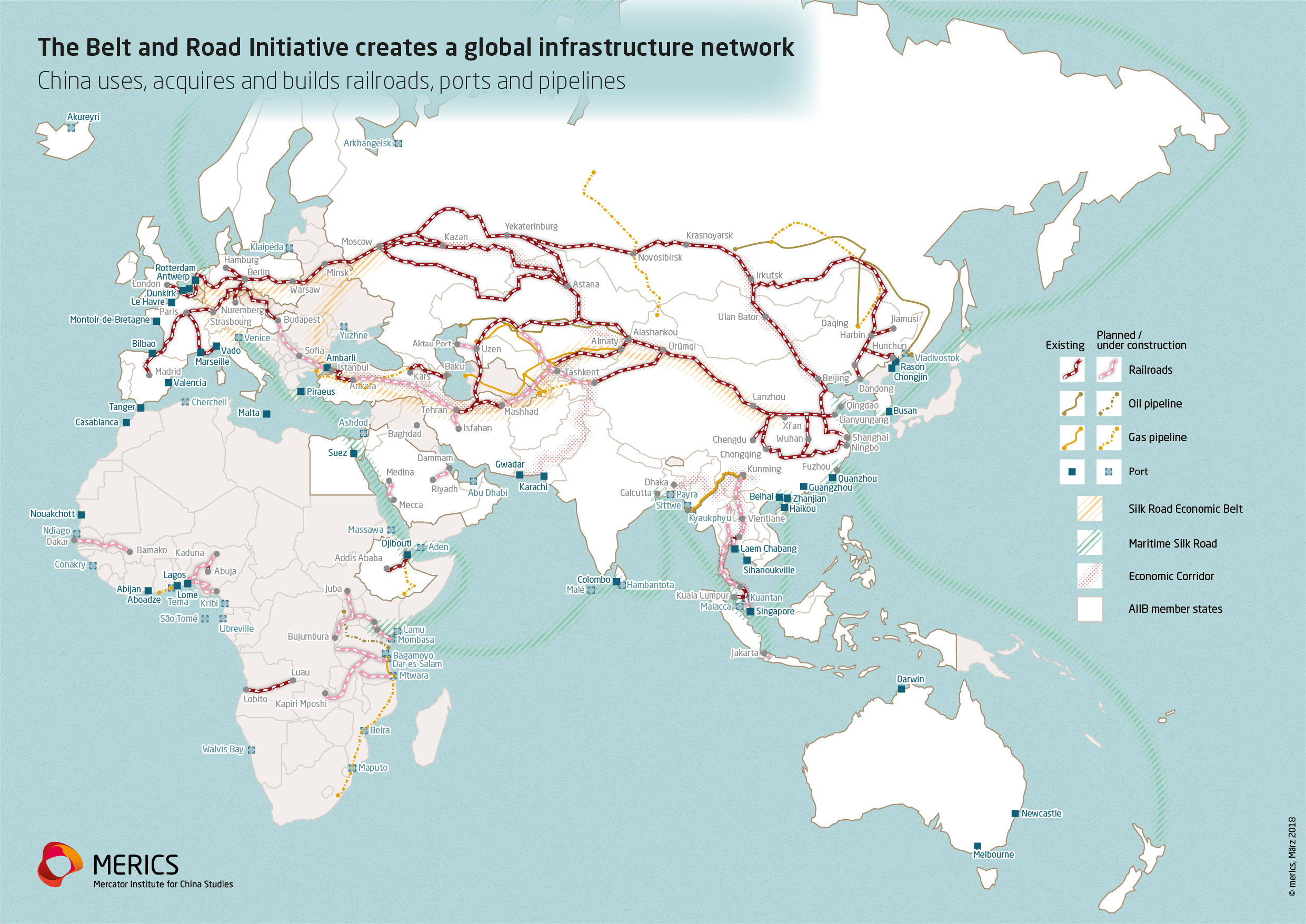
When it comes to protecting its economy and its people, China's leadership is playing the long-game.  The nation uses its economic clout to provide infrastructure and much-needed financial assistance to open doors.  This is in sharp contrast to the United States which uses the threat of financial sanctions and its military might to force nations to hand over their resources.  As you can see on this map, Afghanistan's proximity to China's Belt and Road Initiative is key to understanding why China is so interested in improving diplomatic relations with the war-torn nation:


Thursday, April 6, 2023

Saudi Arabia and Iran - China's Role as Mediator in the New Global Order

Here's the latest news from China as reported in the Global Times, the mouthpiece for China's Communist Party:


Here's a quote with my bolds:


"The Thursday meeting in Beijing follows a landmark agreement brokered by China in March to restore diplomatic ties between Saudi Arabia and Iran, and reopen their respective embassies within two months....


It is a strong stimulant in a volatile and uncertain world, he said. Moreover, the multilateral and equal diplomatic relations that China advocates and practices are once again being recognized by other countries, Zhu said. It is at the same time an indication that US diplomacy, which maintains a Cold War mindset, is being abandoned by the world, he noted....


Saudi Arabia and Iran announced the resumption of diplomatic ties with immediate effect on Thursday in Beijing after the first formal meeting between the two countries' top diplomats in more than seven years. The amplification of China's mediation between the two countries has been remarkable over the past month, showing that the diplomatic philosophy advocated and practiced by China is being recognized worldwide, experts said...


The improved ties between Saudi Arabia and Iran will help safeguard regional peace and stability, setting an example for the world to solve conflicts via dialogue as well as provide excellent practice of the Global Security Initiative and building a community with a shared future for humanity, Qin said.  


Here's an interesting quote:


"It is a strong stimulant in a volatile and uncertain world, he said. Moreover, the multilateral and equal diplomatic relations that China advocates and practices are once again being recognized by other countries, Zhu said. It is at the same time an indication that US diplomacy, which maintains a Cold War mindset, is being abandoned by the world, he noted."


Since the Arab Spring - a wave of protests, uprisings, and unrest that spread across Arabic-speaking countries in Middle East and North Africa - in 2011, confrontation and zero-sum game have become core features of international relations between countries in the Middle East, Liu Zhongmin, a professor at the Middle East Studies Institute of Shanghai International Studies University, told the Global Times.  


Moreover, due to the impact of the West's past colonization, hegemony and power politics, the pattern in the Middle East has typically been characterized by conflict, leading to a vicious circle of security issues and lack of development, Liu noted. 


China's successful mediation in the reconciliation of Saudi Arabia and Iran not only helps to promote the easing of tension in the Middle East, but also to change the regional political layout and a strategic culture characterized by confrontation. The idea and practice of peaceful development, coordinated talks, tolerance and learning from each other that China has been dedicated to promoting is becoming a common option for countries in the region and hopefully will help to promote the trend of easing tensions and development in the region, Liu stressed." 


This quote is quite profound:


"The concept of pursuing independent diplomacy has been on the rise in the Middle East region in recent years. China's diplomatic approach of non-interference in other country's internal affairs, not filling power vacuums or seeking hegemony while promoting dialogue and consultation to address issues is being well-received across the region, experts noted."


I wonder who China is referring to when they mention "non-interference in other country's internal affairs, not filling power vacuums or seeking hegemony"?


Here's how the news was reported on the Saudi Gazette:


"During the talks, the two sides stressed the importance of following up and activating the implementation of the Beijing Agreement, in a way that enhances mutual trust and expands the scope of cooperation, and contributes to achieving security, stability and prosperity in the region.


The two sides affirmed their keenness to discuss ways to strengthen bilateral relations and activate the security cooperation agreement between the two countries, signed in 2001, and the general agreement for cooperation in the fields of economy, trade, investment, technology, science, culture, sports and youth, signed in 1998.


The two sides expressed their desire to intensify consultative meetings and discuss ways of cooperation to achieve more positive prospects for relations, given the natural resources and economic potentials that the two countries possess, and great opportunities to achieve mutual benefits for the two brotherly peoples."


Again, this line is of particular interest:


"They affirmed readiness to do everything possible to overcome any obstacles facing bilateral cooperation."


I wonder what obstacles could appear (cough, Washington, cough).


And, lastly, here’s how the event was reported by Iran’s Tasnim News Agency:


Here's a brief quote:


"The two regional heavyweights have underscored the need to respect each other’s national sovereignty and refrain from interfering in the internal affairs of one another."


That's definitely a lesson that Washington needs to learn.


It's always an interesting exercise to see how foreign nations report on key events which, in general, sharply contrasts the talking points that the world's mainstream media uses like this from the Times of Israel:


...and this quote from an article on Reuters:


"Beijing's role in brokering the rapproachment was seen by some experts as signalling a loss of influence by the United States with Saudi Arabia, amid tensions between the long-time allies over a range of issues, including human rights and Saudi oil production cuts.


CIA Director Bill Burns travelled to the kingdom to reaffirm in talks with his counterparts and national leaders decades-old intelligence cooperation, including on counterterrorism, a U.S. official said on Thursday.


The official did not disclose when Burns' visit took place. The Washington Post, which first reported it, said it was earlier this week."


Apparently, Washington is no longer playing a lead role when it comes to global geopolitical issues.  I believe that we truly are seeing the death throes of American global hegemony.  China is quickly replacing the United States in the new global order.


Saudi Arabia and China - The End of the Old World Order for Crude Oil

For those who are paying attention, it's pretty clear that the United States dollar is under significant threat on many fronts as the major economies of the world seek methods that will protect them from Washington's nonstop use of financial sanctions to force world leaders to act according to America's wishes.  Recent news from Saudi Arabia and China are prime examples of how the world is moving away from the petrodollar system into a new global oil reality.


Let's start with this December 2022 article from the Global Times, a mouthpiece for China's Communist Party:


Here's a quote:


"A discussion of shift to use Chinese yuan in China-Saudi oil settlement is increasingly rising recently amid an ongoing visit of Chinese President Xi Jinping to the country - the trip marks epoch-making milestone in China-Arab relations and also raises hopes for more deepened energy ties for years to come.


The shift is deemed as necessary by observers from both countries in light of the "increasing weaponization of the dollar dominated financial system," they said, hoping the move to inject certainty to bilateral trade and dent the US dollar's hegemony of the global petroleum market."


Now, let's look at the two recent announcements which outline steps that have been taken to bring the two nations closer together.  Here is the first announcement from Saudi Aramco:


Huajin Aramco Petrochemical Company (HAPCO) is a joint venture between Aramco (30%), NORINCO Group (51%) and Panjin Xincheng Industrial Group (19%).  Construction of the $10 billion complex that will combine a 300,000 barrels per day refinery and a petrochemical plant with annual production capacity of 1.65 million metric tons of ethylene and 2 million metric tons of paraxylene will commence in the second quarter of 2023 after approvals are secured.


Here is a quote about the project from Mohammed Y. Al Qahtani, Aramco's Executive Vice President of Downstream:


 “This important project will support China’s growing demand across fuel and chemical products. It also represents a major milestone in our ongoing downstream expansion strategy in China and the wider region, which is an increasingly significant driver of global petrochemical demand."


Here is the second announcement from Saudi Aramco:


Aramco is paying RMB24.6 billion (US$3.6 billion) to acquire a 10 percent interest in Rongsheng Petrochemical Co. Ltd. to expand Aramco's downstream presence in China.  Aramco will supply 480,000 BOPD of Arabian crude under a long-term sales agreement with Rongsheng affiliate Zhejiang Petroleum and Chemical Company.


Here is a quote about this deal from Mohammed Y. Al Qahtani, Aramco's Executive Vice President of Downstream:


This announcement demonstrates Aramco’s long-term commitment to China and belief in the fundamentals of the Chinese petrochemicals sector. It is an important acquisition for Aramco in a key market, supporting our growth ambitions and advancing our liquids to chemicals strategy.  It also promises to secure a reliable supply of essential crude to one of China’s most important refiners.”  


Here is a quote from Li Shuirong, Rongsheng's Chairman: 


This strategic co-operation will take our long-term friendship and mutual trust to a new level, and paves the way for a bright future for the high-quality development of the world’s petrochemicals industry. I believe that Aramco’s involvement will greatly help Rongsheng implement its petrochemical growth strategy.” 


With these two projects, Saudi Arabia is enacting on its strategy to enter long-term demand for its oil.  It is also making significant moves to ensure its membership in the BRICS group of nations which will vote on Saudi Arabia's request to join the group, an issue that will be voted on by the world's fastest growing non-Western trading group later this year.  In addition, we can also see that, unlike their "woke" Western counterparts, it appears that both China and Saudi Arabia are not designing the future of their economies around freedom from fossil fuels, particularly given that Aramco is investing $10 billion into China's oil-based infrastructure.


The old world order for crude oil is rapidly evolving away from domination by the United States and Europe and into the hands of what were recently considered "third world nations" by the self-appointed elites of the global aristocracy.  It is almost as though we can see the domination of the United States dollar as the global currency of choice evaporate by the day, isn't it?