Showing posts with label food. Show all posts

Monday, March 18, 2024

Jeff Bezos and Biomanufactured Food - Our Fake Food Future

This announcement recently appeared on the Bezos Earth Fund website:


The Bezos Earth Fund was established in 2020 by Amazon's Jeff Bezos in 2020 with a funding commitment of $20 billion to be disbursed by 2030 as grants to address climate and nature.  Here's a quote from their "Who We Are" and "Our Journey" webpages:


"The problems we face require all hands on-deck. Philanthropy has a crucial role to play in providing effective flexible funds and risk-taking capacity, and in bringing independent expertise to the design of solutions. The Bezos Earth Fund team is a new philanthropy, and as such we are still learning from others. We are building an inspiring team of thought leaders, problem solvers, and doers from scientific, government, private, and nonprofit backgrounds, all working to deliver transformational change in these critical times."


"The Bezos Earth Fund was established with the largest philanthropic commitment ever to fight climate change and protect nature. We aim to harness the best of human ingenuity, adaptability, and collective action to create a future in which everyone can thrive."


Yes indeed, everyone can thrive...but by everyone, they mean the global aristocracy.


So far, $1.63 billion in funding has been disbursed by the Bezos Earth Fund since the first grants were made in November 2020.


As an aside, the choice of 2030 as a timeframe is not random, it just happens to be the date by which the United Nations Sustainable Development Goals must be achieved.


On March 12, 2024, the Bezos Earth Fund Vice Chair, Lauren Sanchez (who just happens to be Jeff Bezos fiancee) announced an initial $60 million commitment to establish Bezos Centers for Sustainable Protein as part of the Bezos Earth Fund's commitment to "food transformation".  Here is a quote from the press release:


"The Centers will target major technological barriers to reducing cost, increasing quality, and boosting nutritional benefit of alternative proteins by advancing science and technology. To date, challenges in biomanufacturing – the production, at scale, of sustainable protein products, whether plant based, fermented, or cultivated – are resulting in high costs and limited quality. There are also enormous opportunities to enhance the texture and boost flavor through innovation in cell biology and engineering.


We need to feed 10 billion people with healthy, sustainable food throughout this century while protecting our planet. We can do it, and it will require a ton of innovation,” said Sánchez. “Our world is poised for transformation, for a future not constrained by compromise. Solutions to our greatest challenges often come from the quiet persistence of those willing to question, reimagine, and innovate.


The press release goes on to note the following:


"Food is the second largest cause of climate change, and agriculture is the primary driver of deforestation and biodiversity loss. Making the food system more sustainable requires changing the way we produce and consume food. Given population and income growth, by 2050 food consumption is expected to rise by 50%, while emissions from food will need to fall by 60% and pressure on vital forest systems will need to be reduced. New ideas, technologies, and behaviors can make this possible."


So, a fake food future it is.


If you had to make a choice between fake, biomanufactured food or this from our overlords at the World Economic Forum


...which would you choose?


In closing, when you consider your food choice, remember this significant single-point source of climate-changing emissions which is allowed because it is sourced from the ruling class:


Thursday, July 28, 2022

Eating Chicken Bones - Our Dystopian Future

With the global shortage of food threatening to take down western society as we know it, one company has come up with a perfect solution as you will see in this posting.


With chicken shelves looking like this in many stores around the world:


...and with the self-appointed ruling class insisting that we need to wean ourselves from meat that is destined for the delicate palates of the oligarchs, the useless eater class is fortunate that one company has come up with a way to get us to eat ALL of the chicken, allowing for less chicken meat to go further.


Superground, a Helsinki-based food production company....


....founded by these two fellows:


...insists that by rethinking food, we can make food production more sustainable.


Here is their view on the company's chicken processing capabilities:


"Taste the future of meat.  It is delicious, efficient and sustainable."


And we all know how the global ruling class is all about sustainability (well, at least the sustainability of their use of private jets, yachts and supercars).


The company claims the following:


"Food production companies face rapidly changing food markets and accelerating climate change. SuperGround’s novel technology provides scalable solutions for previously unsolved food production challenges. Our holistic approach sustainably increases poultry-based food production volumes without major investments.


While helping reduce the food industry’s environmental impact, SuperGround is lowering emissions and food waste.


The patent-pending process which will turn the entire chicken (short of the entrails) will not compromise either the taste or safety of chicken.  The process will not compromise the taste of the processed chicken, it will improve the efficiency of processing chickens and is "sustainable to the bone".


The process uses heat, pressure and mechanical shear forces to transform chicken bones and other hard tissues into a "mass" with a "mouth feel, taste and smell that is indistinguishable from the real thing" when it is used to modify a 30 percent of a recipe's total mass.  Superground's technology can be used for many food items including nuggets, sausages and kebabs.  


When asked why it is beneficial for the environment, here's what Superground says:


"SuperGround’s process enables the entire use of whole gutted and plucked chicken without any loss in mass. The same chicken input yields up to 30% more food.


Fortunately, the braintrust at the World Economic Forum have already provided us with their views on how meat is wasted on the organ donor class.  Back in February 2019, this article on the WEF website:


...stated that there are a total of 19 billion chickens living on Planet Earth at any one time and that an estimated 50 billion chickens are slaughtered every year for food (excluding male chicks and hens that are no longer egg producers).  The WEF views chickens as the fourth most nasty meat-based greenhouse gas emitters as shown here:


...and that chickens that are raised for meat are drinking way more than their fair share of water as providers of food for humans:


By adding ground chicken bones to the volume of meat produced, the useless eaters will find themselves satiated with a chicken nugget or other processed chicken-based product that could be up to 30 percent bone.  Mmmm mmmm good!


The thought of eating ground chicken bones kind of makes those 3-D printed meat substitutes look somewhat more appetizing, doesn't it?  And just think of the favour that you’ll be doing for the omnipotent ones who will now be able to avail themselves of all of the pure, unadulterated chicken that you will no longer be consuming!  


More nuggets per chicken.  It just doesn't get any better.


Given the subject of this posting, I have to close with this video from The Tragically Hip since the lyrics seem particularly pertinent:


Baby, eat this chicken slow

It's full of all them little bones

Baby, eat this chicken slow

It's full of all them little bones


Friday, March 25, 2022

The Impact of the Conflict in Ukraine on the Global Agrifood Ecosystem

It is becoming increasingly apparent that high levels of inflation are impacting the world's food commodities.  The United Nations Food Price Index which tracks the international prices of vegetable oils, meat, cereals, sugar and dairy products among others hit a record high in February 2022 according to the Food and Agriculture Organization, rising by 4 percent on a month-over-month basis and up 24.2 percent on a year-over-year basis as shown here


...and here:


Note that these food price increases took place prior to the current military adventures taking place in Ukraine.  The FAO notes that there are several factors behind the rise in food prices including concerns over crop conditions, adequate abilities to export food products, an increase in demand at the same time as there were supply-side issues.


The Russian invasion of Ukraine has the potential to significantly worsen the world's food production and price situation.  According to the FAO, at least 12 percent of the world's food calorie exports pass through the Black Sea region.  A recent report from the United Nations Conference on Trade and Development (UNCTAD) assess the impact of the military operations in Ukraine on trade and development given the fragile state of the global economy, particularly given the importance of both Russia and Ukraine to the world's food supply:


Together, the two nations represent the following share in key food items:


Here is a graphic showing the global dependance on agrifood commodities from Russia and Ukraine by nation:


Let's look at some of the world's most food-susceptible nations.  If we focus on the market for wheat in Africa, between 2018 and 2020, African nations important $3.7 billion in wheat (32 percent of total African wheat imports) from Russia and an additional $1.4 billion from Ukraine (12 percent of total African wheat imports).  As many as 25 African nations import more than one-third of their wheat from Russia and Ukraine and 15 of them import more than one-half of their wheat from Russia and Ukraine as shown on this graphic:


History has shown that civil unrest is often associated with food shortages and resultant increases in food prices.  Africa is definitely on the front lines of the food issues that will face the world if Ukraine delays or completely misses the planting of this season's crops.


It is also important to keep in mind that Russia is a major supplier of agricultural chemical products including fertilizer (the world's largest producer) and its component ingredients as well as other crop nutrients.  Over the past year, increases in fertilizer prices have already been partially responsible for much of the increase in food prices.  With Russia's Ministry of Industry and Trade recommending that fertilizer exports be halted, the negative impact on yield of the world's food supply and further increases in food prices is almost guaranteed.  


To show us how dire the food situation is across the globe, here is a summary of an analysis by the International Fund for Agricultural Development or IFAD showing the impact of price increases and other ripple effects of the Ukrainian conflict on some of the world's poorest communities:


1.) In Somalia, where an estimated 3.8 million people are already severely food insecure, the costs of electricity and transportation have spiked due to fuel price increases. This has a disproportionate impact on poor small-scale farmers and pastoralists who, in the face of erratic rainfall and an ongoing drought, rely on irrigation-fed agriculture powered by small diesel engines for their survival.


2.) In Egypt, prices of wheat and sunflower oil have escalated due to Egypt’s reliance on Russia and Ukraine for 85 percent of its wheat supply and 73 percent of its sunflower oil.


3.) In Lebanon, 22 percent of families are food insecure and food shortages or further price hikes will exacerbate an already desperate situation. The country imports up to 80 percent of its wheat from Russia and Ukraine, but can only store about one month’s worth of the crop at a time due to the blast in Beirut’s port in 2020 that destroyed the country’s major grain silos.


4.) Central Asian countries that rely on remittances sent home by migrant workers in Russia have been hit hard by the devaluation of the Russian ruble. In Kyrgyzstan, for example, remittances make up more than 31 percent of the GDP, the majority of which comes from Russia. Remittances are crucial for migrants’ families in rural areas to access food, education and other necessities.


Just in case you weren't aware, the World Bank's President David Malpass did warn people against hoarding food and gasoline because we can count on governments to be there to help us if we need it.  I wouldn't bet on it if I were you.


The impact of the military operations and resulting increased sanctions environment that has been enacted on Russia will most certainly not favour the sweaty masses who consume the world's food supplies.  Perhaps the self-appointed ruling class at the World Economic Forum will see its vision of the serf class surviving on a diet of insects and weeds come to fruition as more and more households in advanced economies find themselves unable to afford to eat, drive and heat their homes and are forced into a subsistence life style, something that Africans have long experienced.


Wednesday, February 16, 2022

Preparing the World For a Diet of Insects

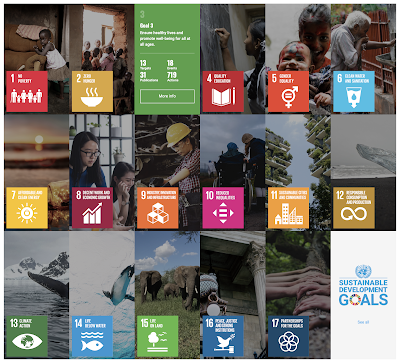
A recent announcement from the European Union may prove to be an important development in the Great Reset, a globe wide movement to build back better in the post-pandemic world, particularly as it relates to the sustainable development goals of ensuring responsible consumption and production and climate action as shown on this graphic from the United Nations:


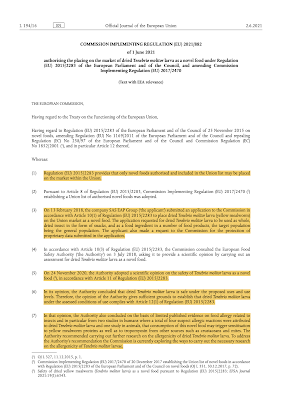
If we go back to mid-2021, we find this announcement on the European Union's website with the pertinent portions highlighted:


As you may have gathered, in June 2021 after receiving an assessment by the European Food Safety Authority (EFSA), the European Commission authorized the marketing of dried Tenebrio military larvae aka yellow mealworm as a novel food item with the whole dried insect to be used in snacks and as a food ingredient in a number of other food products with a target consuming population to be the general population.  Approval is subject to further research into a possible link to allergic reactions from the eating the insect.


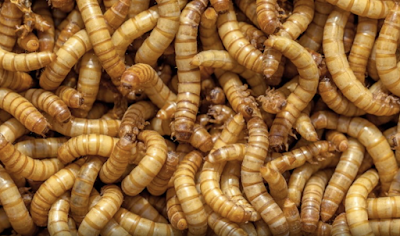
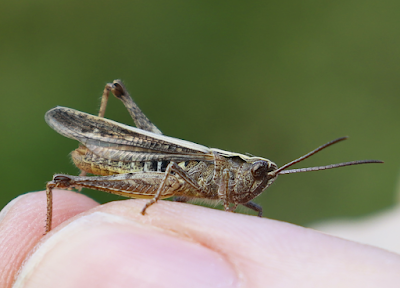
Just in case you were curious, this is what the yellow mealworm looks like:


Mealworms provide a source of protein, fat and fibre.  Mmm mmm good!


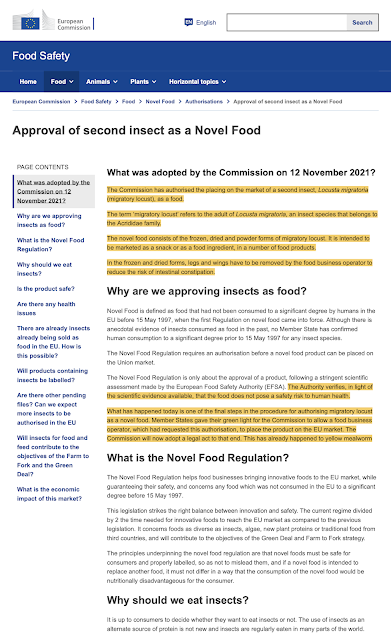
Let's move forward a few months.  On November 12, 2021, the European Commission announced this after receiving an assessment by the EFSA:


The European Commission has now authorized the marketing of dried Locusta migratoria aka migratory locusts as a novel food item consisting of the frozen, dried and powder forms of the insect.  It will be marketed as a snack or as a food ingredient.  When sold in frozen and dried forms, legs and wings will have to be removed by the producer to minimize the risk of intestinal constipation.  Ground forms can include both legs and wings.


Again, in case you were curious, here is what a mouth-watering migratory locust looks like:


In this case, the announcement includes the answer to this interesting question:


Will insects for food and feed contribute to the objectives of the Farm to Fork and the Green Deal?


Here's the answer with my bolds:


"According to the FAO (Food and Agricultural Organization of the United Nations), insects as food emerge as an especially relevant issue in the twenty-first century due to the rising cost of animal protein, food insecurity, environmental pressures, population growth and increasing demand for protein among the middle classes. Thus, alternative solutions to conventional livestock need to be found. The consumption of insects therefore contributes positively to the environment and to health and livelihoods."


FAO also indicates that insects are a highly nutritious and healthy food source with high fat, protein, vitamin, fibre and mineral content. Therefore, they are an alternative protein source facilitating the shift towards healthy and sustainable diets.


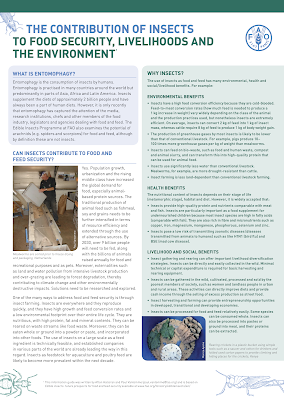
Here are the first two pages from a publication by the FAO on insects:


See, eating insects is all about being green and saving Mother Earth from further meat-based devastation!  How utterly inconsiderate of us all.


The European Commission also informed the useless eaters that the EFSA has assessed Acheta domesticus aka the house cricket as a safe novel food item. and that there are 9 additional applications for insects which are subject to a  safety evaluation by the EFSA.


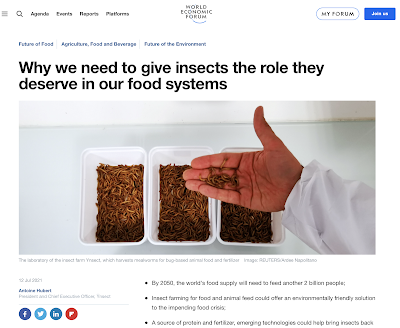
Having noted that the consumption of insects is important to the Green Deal, let's look at what the overlords at the World Economic Forum have to say about this issue since they are experts on absolutely everything:


And, just in case you happened to think that this was a one-off for the WEF, here is another article on the merits of eating insects:


So, there you go.  Insects for the useless eaters/organ donors while the self-proclaimed ruling class feasts on chickens, fish, pigs and cattle.  After all, it's the least that we can do for the billionaire class and their associates...oh yes, and let's not forget Mother Earth.  Slowly but surely, our overlords are doing their best to wean us from our highly environmentally unfriendly meat-based diets.


Addendum:


Thanks to a reader for the insect-based food product in this article which also sounds absolutely delicious:


Tuesday, January 18, 2022

Autonomous Tractors and Farmer-Free Farming

John Deere, one of the companies that has long been associated with the mechanization of farming and the world's second largest manufacturer of agricultural equipment, has now unveiled its latest game-changing farming technology with the revealing of its 8R autonomous tractor.


Here is the announcement from the John Deere website:


According to John Deere, the 8R is the first fully autonomous tractor.  The tractor has been in trial since 2018 and will now be released to farmers who will be able to rent the 8R until the company allows farmers to retrofit their existing sub-autonomous 8R tractors.    It is equipped with six pairs of stereo cameras which enable the tractor to detect obstacles over a. 360 degree horizon.  The images that are captured by the stereo cameras are passed through a deep neural network, the standard tool for solving computer vision issues using artificial intelligence techniques.  Each pixel that is captured by the cameras is classified in approximately 100 milliseconds and determines whether the tractor continues to move or stop if an obstacle is detected.  The 8R also checks its position relative to a geofence to ensure that it is operating where it is supposed to with an accuracy of less than one inch.


To use the 8R, farmers will transport the tractor to a field and, using John Deere Operations Center Mobile app, will be able to control and monitor the tractor using their mobile device. The app will also let the farmer control the tractor's speed, depth adjustments and other critical operations from the comfort of their couch or while they are busy with other tasks.  The first autonomous system will allow the farmer to till fields and additional tasks that could be undertaken without an onboard operator are currently under consideration.


Here is a video showing the 8R in operation:


According to John Deere, autonomous tractors have the potential to save farmers money by automating work that is now done by humans, an issue that is becoming increasingly problematic given the shortage of agricultural labourers.  That said, as car manufacturers like Tesla are finding, autonomous vehicles are not always functioning properly and John Deere's Chief Technology Officer, Jahmy Hindman has admitted that the 8R could have difficultly navigating on its own in snow and rain.  As well, the price of these tractors has not yet been released, however, with prices for its other farm equipment being stratospheric, it is likely that only the biggest farming operations (i.e. corporate farms) will be able to afford this technology.  With the list price of a base model 8R 410 (non-autonomous version) running at $517,548 (U.S. dollars), you can be assured that not every farmer in America and around the world will be purchasing the latest in John Deere's technological inventory.  To upgrade to the autonomous version, consumers will add the three camera equipment pods to the front and rear of the tractor and an Nvidia GPU to the 8R 410.  Hindman estimates that the cost for the automous version could add as much as 10 percent to the total cost of the 8R 410.


Nonetheless, this development is playing right into the hands of the largest owner of American farmland.  Not only is Bill Gates a self-proclaimed expert on vaccines and epidemics, he is also a "farmer".  John Deere's 8R autonomous tractor is, most definitely, Farmer Bill Gates' wet dream come true.  No need for farmers on a farm when you have a robot to do all of the dirty work for you!  Farmer-free farming here we come.


Friday, September 20, 2013

Crop Pests and Pathogens and Climate Change


Updated May 2016

Fascinating research by Daniel Bebber, Mark Ramotowski and Sarah Gurr, recently published in Nature Climate Change, looks at the impact of global warming on the movement of crop pests and other pathogens.  

Pests and pathogens are a big problem for the agricultural sector with between 10 and 16 percent of crop production lost due to plant diseases and additional losses ranging from 6 to 10 percent are experienced after crops are harvested.  In total, the amount of lost agricultural production would be sufficient to feed 8.5 percent of the world's total population.  As shown here, food insecurity is still a huge problem for large parts of Africa and portions of Asia:


During the period from 2001 to 2003, average losses for rice (a staple of the diet of many nations) totalled 37.4 percent with 15.1 percent lost due to pests, 10.8 percent due to pathogens and 10.2 percent lost due to weeds.  It is estimated that global crop losses due to disease cost the economy $220 billion, a not insignificant amount.

How and why are these pests moving to new geographic areas?  Some of these pests are introduced to new areas through the transportation of crops from one area to another, however, weather is a very important factor in sustaining pests in their new environment.  For example, boring pests tend to prefer drought conditions whereas chewing insects do not.  The drought conditions recently experienced throughout much of the United States has increased the number of wood boring insects and has greatly impacted the health of trees and shrubs in many areas.  Warming, as a whole, tends to favour increased winter survival for many insect species and tends to stimulate insects to devour more plant material.  In the past, cold winter weather could be counted on to kill off the majority of insect pests in many areas of North America and Europe; unfortunately, such is no longer the case as many insects are now able to survive the less rigorous winters that we are currently experiencing.

Back to the paper by Bebber et al.  Their research of 612 crop pests and pathogens shows an average annual shift of 2.7 kilometres (plus or minus 0.8 kilometres) toward polar regions since 1960.  Here is a graphic that shows the movement of some key pests:


Those pests that show movement toward the equator are, in many cases, newly detected in those areas as advancements in technology in poorer, equatorial nations are now permitting the detection and treatment of pests and pathogens that were not previously monitored.

It is estimated that global food production will have to increase by 50 percent by 2050 to meet the world's needs.  While global food production has doubled in the last 40 years, the movement of pests into new geographic areas may well make achieving that goal more difficult, particularly if climate change negatively impacts the viability of agricultural operations in areas that have historically been considered some of the world's key producers of food.